Episode 73: M.A.D.E.—Majah Flavah (2006-2008)
This is the second part in a series of episodes on BigBang’s magnum opus: M.A.D.E. I’d had the idea of trying to cover the album the same way I did Winner’s EVERYD4Y and SHINee’s The Story of Light (two other K-Pop masterpieces) but the more I researched, the more I understood that the story of M.A.D.E. is really the story of BigBang and, more broadly, of K-Pop as a genre.
The first episode—The YG Famillenium (1988-2006)—covers the founding of YG Entertainment and the origins of both the early YG Family sound and the origins of some of the characteristics that would define the agency through this early era.
This episode—Majah Flavah (2006-2008)—covers BigBang’s rookie era through their first big hit, “Lies,” and also includes a discussion on what plagiarism in music actually involves.
I mention it briefly in the episode but this episode series will not be covering Seungri’s criminal charges and the Burning Sun scandal. If you’re here for the salacious gossip, you may as well close the browser window now. The media coverage of Seungri and Burning Sun has tended more towards sensationalism and less towards, you know, facts, which has not been all that helpful in understanding what actually happened. There is a timeline of events put together by Billboard that is as good a source as any for a look at how the scandal unfolded and Soompi has a fairly dry list of the charges that Seungri was convicted of. Maybe one day I’ll do an episode series on Burning Sun but this series is not it.
The lawsuit filed by Structured Asset Sales LLC against Ed Sheeran is currently in the Second Circuit Court of Appeals after Sheeran’s side won at the district court level. There’s a good write-up of the case here. Keep in mind that most plagiarism accusations thrown around are nothing more than fodder for fan wars and things like flow jacking, while lame, are neither illegal nor plagiarism. The K-Pop Trend Generator continues to churn through trends and will continue to churn through trends from Coffee Shop Song to Tropical House to Girl Crush to that godawful Hybe vocal processing. Stans can whine and complain and point fingers but at the end of the day, everybody’s faves start out using concepts heavily inspired by other groups before (hopefully) finding their own unique… flavah. (For the example I used in the episode, here’s Kraftwerk’s “Autobahn” and David Bowie’s “Station to Station.”)
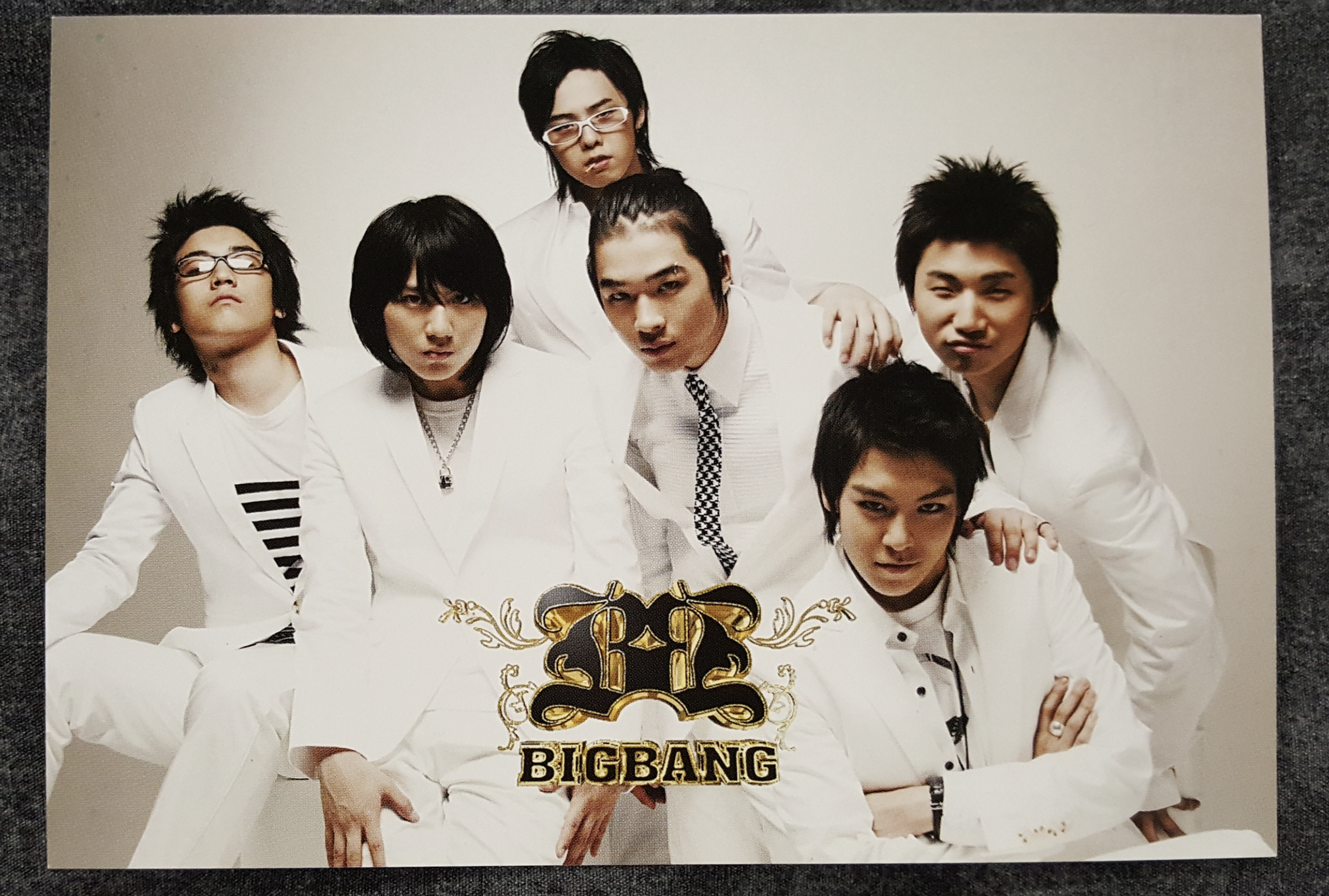
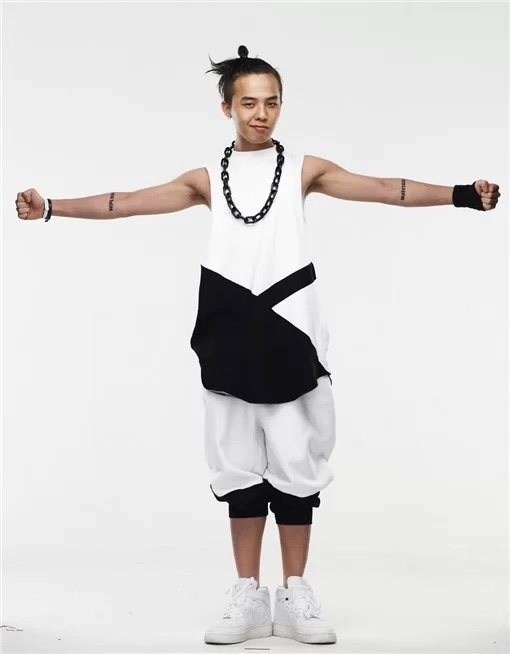
Style was a huge part of the BigBang phenomenon. As this episode ends, we see BigBang beginning to come into their own as the fashion forward, trend-setting idols they would become. Below is six member pre-debut BigBang (photo from My BigBang Collection) and G-Dragon with the “apple hair” in a “Lies” promo shot. If you’d like to get a good look at BigBang at the height of their B.E.T.-ness, linked here is a Getty Images gallery of their performance with the YG Family at TRL Studios in Times Square, New York City, in October 2006,
For more context on the K-Pop idol scene, you may want to check out my series on TVXQ. All four parts are linked here. Episode 50 on “hip hop idols” also provides additional context on the hip-hop scene. The awful New Yorker article referenced in this episode is also linked from the Episdoe 50 show notes.
The songs played are:
“How Gee” by BigBang (Made in Seoul)
“A-Yo” by JinuSean (Official MV—keep your eyes peeled for baby Young-Bae! And one of my favorite videos, S.M. Entertainment rappers doing “A-Yo” at SM Town in Los Angeles in 2010, which just shows that these early YG Family songs really did hit with the American ear.)
“Love Love Love” by Epik High (Official MV; and catch them doing hit song “Fly” on Music Core in 2005)
“Ragga Muffin” by Stony Skunk (live on Music Camp June 4, 2005; and Official MV)
“Storm feat. G-Dragon” by Perry (live on Inkigayo, 2001; and Official MV)
“저 높은 곳에 펼쳐” by G-Dragon and YB Taekwon (and check them out live!)
“Buckwild” (demo) by NBK Gray and Tempo
“Uh Huh” by B2K
“We Belong Together feat. Park Bom” by BigBang (Official MV; please note that T.O.P. still does not have his drivers license)
“Intro (Put Your Hands Up)” by BigBang
“A Fool of Tears” by BigBang (Official MV; I love this video; and a live version.)
“This Love” by G-Dragon (solo song; Official MV)
“La La La” by BigBang (Official MV; for the full effect with the abs flashing choreography, you really need to watch a live stage.)
“V.I.P.” by BigBang (Live performance complete with junk yard fences and flames!)
“Ma Girl” by Taeyang (solo song; Official MV; and if you want a preview of what’s to come, here is him just four years later in 2010 doing this same song.)
“Victory (Intro)” by BigBang
“B I G B A N G” by BigBang
“Try Smiling” by Daesung (solo song)
“Forever With U feat. Park Bom” by BigBang (Official MV and shout out to GD’s little snaggletooth)
“Good Bye Baby” by BigBang (Official MV; and a live performance with the choreography point move although watching now I think I misspeak in the episode and it’s Daesung who pops out, not Seungri.)
“다음날” by Seungri (solo song)
“Big Boy” by T.O.P. (solo song)
“Dirty Cash” by BigBang (Official MV)
“Shake It” by BigBang (unlike “Dirty Cash” you can still catch BigBang performing this one into the 2010s.)
“Lies” by BigBang (Official MV; drop what you’re doing and WATCH IT NOW)
“Sky High” by FreeTempo (there will be more about Shibuya Kei in the next episode!)
[Neil Sedaka from This is Pop]
[Milhouse in The Simpsons, “Lemon of Troy”]
“How Gee” by BigBang (Official MV; the MV should give a clue to the deliberate use of a nostalgic sample)
“How Gee” by Black Machine (Official MV)
“Last Farewell” by BigBang (Official MV)
“Fool” by BigBang (one of my favorites!)
Our opening song today is “How Gee” performed live at BigBang’s Made in Seoul tour, April 26, 2015. The track originally appeared on the For The World EP, a Japanese release from 2008, written by BigBang and their long time collaborator Perry and produced by Brave Brothers. I like this live version because BigBang’s long-time touring band, Band Six, really lean into an old school G-Funk vibe with the arrangement. That funky bass line is everything. And the English lyrics are ridiculous in the best way possible: BigBang gonna raise the roof, y’all. BigBang gonna raise the roof.
For those of you just joining me, this is part 2 of a look back at BigBang’s M.A.D.E. series. And I mean way back. When we left off at the end of part one, we’d reached 2006 with BigBang set to debut. This was about a decade after the legendary “Fathers of K-Pop,” Seo Taiji and Boys, had disbanded, and it was also approaching the 10th Anniversary year of YG Entertainment, the company founded by one of those “boys,” Yang Hyun-Suk also known as Yanggoon or YG.
To give a little context, during the early to mid 2000s, both K-Pop and the Korean music industry more generally had suffered something of a slump, thanks to both a government crackdown on industry corruption in 2002 and the cratering of albums sales in the wake of illegal downloading and the introduction of technology like the mp3 player, which allowed for those illegal downloads to be played on the go. While K-Pop agency SM Entertainment had figured out how to goose album sales numbers thanks to 1) opening up the Japanese market where sales were still king and 2) the re-introduction of the idol group format with TVXQ in 2003, teens and young people were increasingly moving their media consumption online and they were moving online fast, thanks to Korea’s investment in high speed Internet access. Wired Magazine even called South Korea the “bandwidth capital of the world” in 2002 and four years later in 2006, that bandwidth had only grown. Korean teenagers were online and online in a big way.
An English-language interview from the Harvard Asia Pacific Review with YG Entertainment act JinuSean published in 2003 gives a sense of the artist’s perspective in Korea:
Sean: “It’s killing the industry, you know? You need to invest to get the music. But since people are downloading, and not actually spending the money to buy the music, it’s harder to make a record… Our budget for a record used to be, like, 10,000 dollars. But since we’re not selling that much, we have to decrease that amount, or we’ll run out of business.”
The interviewer then speculates that the Korean market is particularly vulnerable to downloading because it is so small. After which there’s this exchange:
Jinu: “It’s a small market, but Korea has the highest % of high speed networks, so that’s… (laugh) you know, really good for downloading.”
Sean: “We used to make 2 or 3 records a year, but starting last year there weren’t any at all.”
Jinu: “... Yeah I think’s mostly due to the downloading.”
Anecdotally, when I mentioned to my brother that I’d been listening to a ton of early 2000s Korean hip-hop preparing for this episode series, he knew exactly the albums I was talking about. He was one of many non-Korean middle schoolers worldwide who stumbled across JinuSean on certain mp3 sharing platforms in the early 2000s, thanks to the free-for-all of music pirating coming out of Seoul. It’s a dynamic we’ll see again on a much bigger scale with sites like YouTube. Again, this is anecdotal, but I think my brother’s experience does speak to the fact that 1) file sharing on the Internet was a crucial part of spreading Korean music to non-Korean audiences and 2) the predominantly Korean-American team at YG Entertainment was making music that was accessible to American kids.
But back to the story. So, as much as artists like JinuSean would have preferred it otherwise, the digital genie had been let out of the bottle in Korea. The Napster-like Korean file sharing site Soribada had been shut down in 2002 but people could listen to songs for free on Bugs, the most popular of the Korean digital music services all the way up until 2005 or so… when the founder was sentenced to prison time and the company was forced to cut a deal with the record labels. There was also another platform called Cyworld, a popular MySpace-type Korean social networking site, which had begun booming in 2002 and which also had a popular music component. The song you had playing on your Cyworld page was important for young people in the early-mid 2000s and, in 2006, where your song was on the cellphone ringtone charts was a far more important metric than album sales in judging a song or artist’s widespread popularity. Think of ringtones in the 2000s as the equivalent of the TikTok hits of today. A lot of industry time and money was invested in the ringtone market. And it was a lucrative one, especially in Korea where cell phone became ubiquitous among young people years before it happened in the US. Here’s T-Pain quoted in an issue of Billboard Magazine dated October 27, 2007:
“I had people at Jive tell me they didn’t believe in my product and let me know that they didn’t too much care… But selling 6.7 million ringtones [for “Stripper” and another single, “I’m Sprung,” combined] changed their minds.”
In South Korea, the wired capital of the world, ringtones were vanguard of the natural progression of telecoms fully entering the music market. When we get to 2006, these telecoms were actively working to move listeners away from the free services like Bugs and onto gated, paid music platforms like SK Telecom’s new music rental site: MelOn. And with the days of cash changing hands for physical albums long gone, the pressure was on from the music industry to make sure that the telecoms enforced copyright standards in Korea. A Billboard article in December 2003 estimated that labels and music publishers may only have been getting 20% of that sweet ringtone revenue. They couldn’t let the same thing happen with these new telecom-run music platforms.
And then musically, in the early part of the 2000s, the domestic market had turned against lip-syncing acts and what was then called “dance music,” the genre that we know today as first generation K-Pop. Ballads, R&B soloists, vocal groups, and, increasingly, hip-hop had become the dominant genres. Mainstream pop-adjacent hits from hip-hop acts like Epik High and a reggae duo called Stony Skunk—more on them in a minute—sat in-between songs from sexy ex-FinKL singer Lee Hyori and tender ballads by guys like Yoon Do Hyun and the soft rock band Buzz on television music shows.
But change was in the air. SM Entertainment had completely revitalized the boy group market with TVXQ in late 2003 and then the mega-group Super Junior in 2005. DSP Entertainment had also jumped into the boy group market in 2005 with SS501 (Double S 501). With no signs of flagging popularity for any of the three groups on the horizon, and with TVXQ focusing more on the lucrative Japanese market than in Korea, the time seemed ripe for another boy group to debut and grab a share of both the brand endorsements and that sweet, sweet, teen girl pocket money.
YG Entertainment at this time was still a midsize, independent agency specializing in hip-hop and R&B; but they had bigger ambitions. If you remember from part one, Yang Hyun-Suk (also known as Yanggoon or YG) had taken all the money he’d saved from his time with fathers of K-Pop Seo Taiji and Boys, gambled it on producing his own boy group, and had lost everything. He’d come back from complete zero by partnering with a series of talented musicians, producers, and industry people, most noteworthy was Perry, a mixed-race rapper from Guam, and Perry’s protégé, an up-and-coming Korean born-Los Angeles raised rapper/producer named Teddy, along with Korean-American rappers Jinu and Sean aka JinuSean (you met them earlier) and Park Kyung-Jin, an R&B producer and head of YG Entertainment partner label M.Boat.
While previously the agency had been focused on selling albums, if you remember JinuSean’s words earlier—that was simply no longer a viable business plan. So, looking for new revenue streams in the face of cratering sales, YG Entertainment had turned to 1) the export market and 2) increased commercialization, all while trying to keep up the agency’s artistic cred as the home of Korea’s best hip-hop and R&B. As we pick our story back up in 2006, the company had a stable of respected artists signed to both YG Entertainment and to their affiliated sub labels, including, yes, the aforementioned Stony Skunk, who YG had signed to a new sub label called YG Underground in 2005.
Stony Skunk were a two member reggae group—Jo Seung-Jin aka Skull and Kim Beyong-Hoon aka S.Kush—who had been kicking around the indie scene for a few years, even releasing an album in 2003 that had done… nothing much. Again, nobody was selling anything in 2003. Realizing that they needed a bigger platform to actually get their music out to people, as kind of a Hail Mary pass, the duo had approached YG Entertainment with some demos for a new album and, always willing to take a bet on talent, YG snapped them up, releasing their album Ragga Muffin in June 2005, with its explosively catchy title track, a song that like JinuSean’s “Gasoline” almost a decade earlier, would spark a love of hip hop in the next up-and-coming generation of Korean rappers: a song so incredibly catchy that even now it lives rent free in my brain, a little number called, “Ragga Muffin”.
Seeing Skull and S.Kush absolutely crush it on shows like Music Camp, dressed in wife beaters and baggy pants, reggae perms flying, right alongside acts like teen singer BOA and adult-contempo crooners like Eun-Hyul… it was clear that the days when Seo Taiji and Boys had been forced to shear their own “reggae perms” before being allowed on television were long gone. Hip-hop truly was mainstream. Friend of the YG Fam, Korean-Japanese rapper Verbal from the popular Japanese hip-hop act m-flo was apparently so impressed with the Stony Skunk album that he brought copies back to Japan to distribute. Skull and Kush would be important links in the next generation of the YG Family.
Stony Skunk were a much needed jolt of energy for YG Entertainment. The big hitters from the first part of this series, JinuSean and 1TYM, either had already moved or would soon be moving into behind-the-scenes roles. There was Big Mama, a popular female vocal group marketed in classic blunt YG style as “ugly but talented” and the wonderful R&B vocalists Wheesung and Gummy and the talented female rapper Lexy, but all of them were suffering from the record sales slump. YG Entertainment had debuted an unfortunate dud of an R&B vocal boy group in 2005 called SoulStar. SoulStar were firmly in the lane of popular acts like SG Wannabe and something of a little brother group to YG’s own Big Mama. They were talented, sure, but like YG’s attempt with Keep Six a decade earlier, the group was a complete mismatch for where the market was.
Other than Stony Skunk, the one truly bright spot was the multitalented “Korean Usher”... Se7en. He zoomed into teen girls’ hearts on his heelys in 2003 and after establishing himself in Korea, he’d been sent to Japan and China in 2005 to very promising results, with lucrative brand deals and concert revenue supplementing the foreign album sales. As we get into 2006, both of the company’s aces, Stony Skunk and Se7en, were both being prepped for major American crossover debuts in 2007, and YG had good reason to believe there would be a market for them.
Se7en, Jinusean, and Wheesung, had been sent on a package tour of the United States in 2004 with stops in Los Angeles and Chicago, alongside a couple of artists from another midsize R&B company, JYP Entertainment, including a young contemporary of Se7en’s, an R&B singer named Bi or Rain. Judging from accounts in the American press at the time, this 2004 package tour appears to have been a complete financial disaster but not because of lack of interest in the artists. If anything, the tour seemed to have proved that there was a very passionate audience for Korean music in the United States, both in the Korean diaspora and, thanks to the Internet, even beyond it. And as we enter 2006, the tenth anniversary of YG Entertainment, a YG Family world tour had been planned to further test the waters and there were dates in Seoul, Tokyo, and three cities in the United States.
So, in that auspicious tenth anniversary year, with Se7en now almost exclusively focused on the non-domestic market, the push was on to debut a new act for the domestic market. With the sour failure of earnest R&B vocal group SoulStar still fresh, YG seems to have taken a look around and decided to throw his cards all in on that sweet, sweet teen boy group gravy train. But YG would do it with a twist, with something that had never been tried before: Hip-Hop Idols. Leaving nothing to chance, YG began laying the groundwork for the group that would become BigBang months before their official debut on August 19, 2006. In order to build interest in the group, he would introduce them to the teenaged fan base before their debut through an in-house produced reality show documenting the formation of the group. Something like the American series Making the Band hosted by P.Diddy and, crucially, leaning into where the culture was headed, this series was going to be available where the teens were: online. And those teens…again, remember my brother? Increasingly, those teens weren’t all in Korea.
With this new group, we’ll also see YG lean into the three pillars of K-Pop that he learned from his days with Seo Taiji and Boys and that I discussed in part one of the series: 1) Seo Taiji’s determination to play by his own rules, which had the unfortunate side effect of some truly nasty reprisal from the media—something we’d see again and again with BigBang; 2) The importance of FASHION in selling K-Pop; and 3) Meeting the fans where they were at, in this case: online.
And speaking of fans, crucially, the group soon-to-be-known-as-BigBang wasn’t going to be starting at complete zero. Two of the potential members had already been working as part of the YG Family for years, six years to be exact, and they had fans ready and waiting to be converted into BigBang fans.
Kwon Ji-Young, better known by his stage name G-Dragon, had been a former child star when he was scouted by YG Entertainment. Slightly built with a small face and big eyes, as a teenager he still had a very boyish prettiness even under all of the rap swagger and ill-advised reggae perms. Like many child stars (and aspiring child stars) Ji-Young’s parents had spotted his talent in singing and dancing early on and pushed him into auditions and dance lessons. And Ji-Young’s parents had been right that their son was something special. As an elementary school student, he earned a place in “Little Roo’Ra” a child cover band of the popular group Roo’Ra. When Little Roo’Ra disbanded, he found his way to idol training, first with SM Entertainment then when the young Ji-Young, along with scores of other Korean kids, became fascinated with hip-hop thanks in part to songs like JinuSean’s “Gasoline,” he started taking classes at a freestyle rap academy before joining as a trainee at the hip-hop agency: YG Entertainment, where his precocious rap skills earned him a place on YG Entertainment’s star producer Perry’s debut album. Little G-Dragon was encouraged by his seniors like Perry to start writing raps and learning about song production. YG encouraged him to turn in one song a week as training and the young G-Dragon would learn how to adapt and re-write songs to suit his own style. 17 during the filming of the documentary series, he had just turned 18 years old as BigBang made their debut. In the young G-Dragon, YG had spotted and encouraged the similarities to another teenaged wunderkid from 15 years earlier—Seo Taiji—and YG would explicitly encourage the comparisons in the media, setting very high expectations for the young GD.
Then there’s Dong Young-Bae, who had just turned 18 in the months leading up to debut. He’s known today by his stage name Taeyang, meaning “sun,” to go with the cosmically named “BigBang,” but at the time, he was known to young fans of the YG Family by the name Taekwon. Compactly built and muscular even as a teenager, Young-Bae was another former child star. His family was one of many that had suffered hardships in the wake of the 1997 Asian Financial Crisis and Young-Bae was one of the generation of kids who joined the entertainment industry in order to earn money to help their families. Before finding music, he had tried his hand at acting, eventually getting selected to play Little Sean in JinuSean’s “A-Yo” video in 2001 before earning a spot as a trainee at YG Entertainment alongside G-Dragon. The two were the same age—important in hierarchical Korean culture—and quickly became fast friends. They even formed a rap duo, “G-Dragon and YB Tae Kwon” and made several appearances at their seniors’ concerts. They were fully expecting to debut as a duo, much like their seniors JinuSean. Young-Bae would have to switch from rap to singing as part of BigBang, although, in their earliest work you can still hear shades of the rapper that could have been: Taekwon.
This duo of elite trainees, six years into their YG Entertainment career, who again, already had a fan base as part of the YG Family, were a natural choice for YG Entertainment to build a new boy group around.
The rest of the line-up included Kang Dae-Sung, stage name… Daesung. He was 17 years old at debut. Unlike G-Dragon and Taeyang, Daesung did not have the support of his parents in his desire to be a performer. His family are practicing Christians and upon hearing that the young Dae-sung had fallen in love with singing and performing, his father encouraged him to become… a pastor. Not an easy conflict to navigate for the young Dae-Sung and it seems to have weighed on his mind in their early days. Despite not having a particular background or interest in hip-hop and R&B, he had auditioned for and been allowed to join YG Entertainment because his father had heard of Se7en. And despite being known today for his gorgeous voice and his musical skill, Dae-sung was selected to join BigBang mainly for his smiling personality, setting the template for the Happy Virus, Smiling Sunshine boy group member for years to come. Although, in my and many other fans’ opinions, Daesung is an extremely attractive man, it is true that he is not now, nor has he ever been, the pretty boy chocolate box type. But he has a huge and infectious smile, which rarely flagged while he was on camera. In YG’s brutal, no frills PR style, in press for the young group, he made a point of emphasizing that Daesung was not selected for his looks, all but outright saying that BigBang was going to be a group that had fuggos in it because even though they were an idol group, they were still a YG group and therefore, all about the music.
Tall, lanky, and darkly handsome Choi Seung-hyun, the oldest of the group, was 19 at debut. His stage name, TOP, was given to him by Se7en but many fans in the early days would have known him by the name “Tempo.” Before joining YG Entertainment as a trainee, the young Choi Seung-hyun had built up his reputation as “Tempo” in the underground rap scene (and also apparently as an aspiring hip-hop clothes dealer, according to BigBang’s 2009 group memoir, Shout the World). Despite being a little older, Choi Seung-hyun had been friendly with G-Dragon before debut; the pair shared a love of hip-hop music which transcended age. Famously, despite YG Entertainment allegedly not casting for looks, the young T.O.P. had had to drop a ton of weight in order to pass the trainee audition—20 kilos in 40 days, as the story goes, which is insane. At YG Entertainment, you could be fug but not fat. Like JinuSean’s Jinu, T.O.P. comes from an artistic family, his grandfather was the respected novelist Seo Gun-Bae and his great-great uncle is the famous abstract painter Kim Whan-Ki. Keeping in the family tradition, a love of and respect for the arts has infused T.O.P.’s own work from the beginning. T.O.P. has a deep voice and killer sense of rhythm and word play and found that his style worked very well alongside G-Dragon’s reedy tenor and more melodic rapping style.
There were two more trainees selected to participate in the reality show that were cut during the final round. But YG, with a flair for the dramatic, said he’d give them one more chance to impress him.
Jang Hyun-Seung was told he was good at everything but not a standout in anything in particular. He would eventually leave YG Entertainment and go on to become a member of the very popular boy group Beast.
And Lee Seung-hyun, stage name Seungri, fatefully, despite having his shortcomings blasted loudly and publicly by YG, would end up joining BigBang as their maknae, or youngest member. Only 15 years old at debut, the little Seung-hyun had desperately wanted to be in show business. He’d been part of a dance crew in his hometown of Gwangju and had come to Seoul to participate in a talent competition show called Battle Shinhwa before going on to join YG Entertainment as a trainee. Not only was Seungri much younger than the others but, further marking him as an outsider, unlike the other four, he wasn’t based in the big city of Seoul. It couldn’t have been easy for him to find his place, going from being a big fish in a little regional pond to being thrown head first into the massive ocean in Seoul with every teenaged flaw on public display. Little Seung-hyun at debut was adorable. Skinny and still very boyish, he also constantly sported a pair of dark circles under his eyes that made him look like a panda. At debut he was slotted into the cheeky maknae role and there are many fans who still fondly remember his teen cute-but-naughty persona. His stage name would fluctuate from Seungri—meaning victory—to “V,” also for victory, before settling back on Seungri. It was an ironic name for a kid who seemed like he was always trying too hard to play catch up with the other guys.
And at this point I should mention the elephant in the room. Seungri would eventually leave the group in 2019 due to charges related to the Burning Sun scandal. He would be convicted and go on to serve time in prison. Seungri isn’t the first idol to go to jail and he certainly won’t be the last. Opinion on Seungri is very divisive for reasons that are beyond the scope of this episode series so consider this your trigger warning—if you need one—that Seungri is a part of the series but also to note that I won’t be going into the Burning Sun scandal; this series is focusing only on BigBang’s musical evolution through M.A.D.E.
No matter what you think of him today, in order to really understand how BigBang was seen in 2006, it’s important to try to keep in mind that the Seungri in this episode is still just a fresh-faced, panda-eyed kid of 15, not yet the party-loving, opera buffa villain “Great Seungri” character he would eventually grow into.
If you want more information on Burning Sun and what eventually happened to Seungri, I can link to some sources in the show notes but his criminal charges and conviction are outside the scope of this series.
Are we okay? Okay. Now back to the story.
Some (if not most) of the BigBang members had been conflicted about debuting in an idol group. As I said, YG Entertainment, at the time, was known as the hip-hop agency. And while hip-hop idols are common today, with rappers like Mino from Winner easily crossing back and forth between the two spheres, in 2006, the concept had not yet been tried. T.O.P., in particular, was worried that debuting as an idol would mean that he would no longer be taken seriously by his peers. To quote T.O.P. from a fan translation of BigBang’s 2009 group memoir, Shout the World:
“My mind was a bit complicated during auditioning. Not only was I worried about dancing but knowing that the documentary would be recording the members who would/wouldn’t make the cut, my biggest concern was: “I’m an idol group so does that mean I have to learn choreography?” How would my seniors, juniors, and coworkers think of me now? I had mentioned to them my passion for music during my activity as an Underground rapper. Would they think I’m yet another “singer” following other people’s footsteps? These thoughts passed through my head day after day.”
And he wasn’t the only one. As I mentioned earlier, G-Dragon and Taeyang had also been working towards the idea that they’d be debuting as a hip-hop duo, like JinuSean. And Daesung had just wanted to sing. But doubts or no doubts, BigBang would make their official debut on August 19, 2006, as part of the YG Family 10th Anniversary Concert held in Seoul and it would kick off a full court press of performances and promotions through the end of 2006 and well into 2007.
So, BigBang, at debut, weren’t set up like the other idol groups on the market. For one thing, they didn’t look or act like idols, to the point of receiving scores of hateful comments calling them short and ugly. While other teen idols on the market were imitating Japanese idol Kimura Takuya’s very de rigueur fluffy, feathered hairstyle, YG seems to have used American boy group B2K as BigBang’s primary style inspiration. Taeyang’s braided hairstyle at debut strongly echoed B2K member Omarion’s. To this B2K style base was added a heavy dose of self-produced YG Family group 1TYM, essentially BigBang’s older brothers, with just a dash of TVXQ-style intra-member camaraderie (and shipping). Leaning into the American exotic that YG had been known for, BigBang’s early sound and styling would draw heavily from the urban aesthetic of American music channel B.E.T., which, according to contemporary accounts, played constantly in YG’s offices. The bandanas, bare chests, and wide variety of hats seen in videos from acts like B2K, would form the basis of BigBang’s stage wardrobe in these early promotions. Something that must have pleased the aspiring “hip hop clothes” salesman, T.O.P., although the oversized clothes really didn’t help with the charge that they were all a bunch of shorties.
The initial roll out of promotions for the first single marketed G-Dragon as Seo Taiji’s heir, the next big self-produced wunderkid. G-Dragon’s name was all over the track listing and he was the only member to receive a solo track, “This Love.” It was an unusual strategy for a boy group and concerns were raised among the burgeoning teenybopper BigBang fandom that the group was going to be nothing more than “G-Dragon and Friends.” And fans weren’t wrong to be concerned. Heavily emphasizing one member of such a young group seems counterintuitive but emphasizing the members as individual talents from the beginning was something that set BigBang apart from the other boy groups on the market. Still, YG himself felt compelled to address the fan rumblings in one of his periodic “Messages from YG,” dated August 21, 2006, admonishing fans that G-Dragon had waited six years to debut so don’t get your knickers in a twist and cut him some slack. Don’t worry, YG said, all the other members will get their solo songs in this promotional rollout.
The other thing that fans were concerned about was the missing legacy media rollout for the first single. No television; no radio. Seo Taiji’s Mystery Strategy in action. YG, in the same message, explained that BigBang wasn’t going to have a typical debut where everything is focused on one big release. In keeping with the digital strategy of the documentary series, rather than pushing one major album, BigBang was going to be releasing a series of three singles, one a month, accompanied by an eventual seven music videos to go with them. All to be released online. And, as if to emphasize that BigBang was not going to be relying on sales, a couple of weeks before the physical CD single was released on August 29, 2006, the songs were released to online platforms and the debut MV was made available to the public on YG Entertainment’s website.
The title track of the debut single, “We Belong Together,” was an R&B slow jam written by G-Dragon and Teddy and featuring the vocals of another YG Trainee, Park Bom. From the vantage point of 2024, the beat feels extremely dated, plugging along at a leisurely mid-tempo head nodding pace. But there are signs of greatness to come. “We Belong Together” spotlights what would become one of BigBang’s greatest strengths—the complimentary verses and rapping styles of G-Dragon and the former Tempo-now T.O.P. The song, like JinuSean’s “Tell Me” featuring Uhm Jung-Hwa, has Park Bom playing the lady love to the contrasting verses of G-Dragon and T.O.P. It’s a sweet song, with Park Bom entreating her gentleman lovers to trust and believe in her and in them as a couple, er, thruple.
You can already hear the seeds of GTOP in this doofy teen love song. G-Dragon has a more melodic flow, almost riding on top of the beat while singing about his lady’s lips, while TOP, on his verse, plays in and around the beat and goes in for a more philosophical bent. There’s a nice section where TOP goes on a run of nature metaphors for love ending in “it’s like the sea” which he spits out like surf crashing against a rock 바다 같다오.
Unlike the song, which is only G-Dragon and TOP, the video features all the members of BigBang, who in classic boy group fashion, are depicted as a group of best friends just hangin’ out rehearsing their dance moves and goofin’ around. G-Dragon at one point attempts to woo a girl by showing her a pair of his flyest sneakers and T.O.P., despite not having a driver’s license, raps his verses while “driving” a flash convertible around Seoul.
The rest of that first single contains the party song “Intro (Put Your Hands Up)” written by G-Dragon and Brave Brothers aka Kang Dong-Chul, an ex-juvenile delinquent who found God in the form of a Cypress Hill CD and turned from a life of crime to a life of making beats. He had a more club-music oriented vibe to his songs than Teddy or Perry, who were more hip-hop influenced.
Then there’s “A Fool of Tears,” a Korean-ballad flavored R&B slow jam which spotlights the growing skills of the vocal line and the video for which shows the members being extremely plaintive in the pouring rain while dressed in white t-shirts and/or wife beaters.
And lastly, G-Dragon’s solo song, “This Love,” a perky adaptation of Maroon 5’s “This Love,” that likely started as one of the weekly song adaptations G-Dragon had to turn into YG. The closing lines of “This Love” in which G-Dragon references a “J” who broke his heart, stirred up intense fan speculation. Not everyone thought they were a bunch of fuggo shorties…
What I find interesting about this first single is the mix of genres. From the club beat of the intro to the slow jams and then adding in the perky, rock-based “This Love.” Intentionally or not, I think it signals the wide mix of genres that BigBang would play with both as a group and in their solo work.
Proving that online promotions weren’t just a fool of tears, even without any television promotions, their fan community on FanCafe had grown to 40,000 members. A September 2nd fan sign event at a record store brought out a reported 3,000 fans and a showcase event on the 15th, another couple of thousand fans.
BigBang’s second single, released September 28, 2006, contained the song that is probably the most fondly remembered out of this first batch of promotions: “La La La,” which was also the theme song to the documentary series. Not only does the song have extremely endearing teen boy lyrics—G-Dragon explaining to the listener that BigBang only busts with the real shit—but “La La La” features a classic minimalist and super-catchy beat from Perry that even today is extremely evocative of that early late 1990s/early 2000s YG Family sound. “Do do do dooooo do do dooooo dooo” A musical madeleine, if you will. A simple four note melody played on keyboard, lightly hung off the top of a rhythm track. The way it interplays with the sung “La La La” chorus is just… divine.
“La La La” is a pop delight and the perfect choice for BigBang to make their debuts on the assorted music shows of the era. The choreography for the song is pure teenybopper bait and features the members lifting their shirts to flash their abs at the camera, to massive screams from the girls and women in the audience.
The other tracks on the single included “V.I.P.”, a quote “tough” hip-hop song that included a lot of flames and faux junk yard fences when performed on the music shows, and Taeyang’s panty-dropping solo track, “Ma Girl”, a cover of the Israel Cruz song. The video for “Ma Girl” is as erotic as an 18-year old Taeyang could get and features him splayed out on white sheets, doodling in an art room, and in what would become a Taeyang trademark, singing directly at the camera, skin bronzed and glowing, lips looking so luscious that I can only imagine a not insignificant number of girls were tempted to smooch their computer screens. Maybe some of them did.
But there was already trouble lurking in BigBang’s Fantastic World. Fans had noticed Daesung having trouble reaching some of the high notes during music shows—which in 2006 were being done without lipsync—and the diagnosis was confirmed by YG in another one of his messages dated September 29, 2006. Daesung had vocal nodules. It would be a tough recovery process for the young singer. Again, just to remind you, the listener, he was still only 17 years old at this point.
Daesung’s vocal nodules are worth mentioning for a few reasons. 1) He was able to lean on his company senior, the singer Gummy, for support. She’d also had vocal nodules and helped him through the worst of it. This type of support from senior talents to their juniors was extremely important in the early years of YG Entertainment. As a fan, you truly felt that the “Family” label wasn’t just marketing. 2) The fact that Daesung had developed nodules points to extreme overuse of the voice by the young singer. Something I suspect likely came from long periods of training without proper rest. And that leads to 3) Although trainees in most of the big idol companies today go through regimented training in dance, vocals, foreign languages, etc. when the BigBang members were coming up, their training was essentially… just watch your seniors and figure it out yourself. Taeyang and G-Dragon talk about just being given a practice room and told, “Have at it.” There are good things and bad things about this approach but it’s worth keeping in the back of your mind that despite the reputation of quote Big Three unquote training systems today, these guys did not have the regimented training of the type described in the infamous 2012 New Yorker article, “Factory Girls.”
Anyways, so the young teens of BigBang plowed ahead through a packed October, which included a series of American tour dates for the YG Family 10th Anniversary tour and a performance with the YG Family at the TRL Studio in Times Square, New York City. During the tour they discovered what Se7en and JinuSean had discovered two years earlier: the YG Family had fans in America. Fans! And rookie group BigBang, in particular, was already pulling in excited American teen girls, dozens of them showing up at the airport. Korean news accounts at the time noted that there were even non-Asian fans joining in the excitement, something I was able to corroborate with contemporary fan posts on forums like Soompi. In the days before global social media, before social media managers on Twitter and YouTube comments sections, YG Entertainment really had no way of knowing what the American fan base for an act like BigBang would look like—if it even existed at all—except by actually going to America. So off they went.
And it’s worth pointing out here that those young American teen girls excited about BigBang were engaging with YG’s online media rollout exactly the same way as their counterparts in Korea were. Those early forum posts include girls sharing instructions in English on how to navigate Gom TV, the Korean language media player, so that they could stream BigBang content. Only Korean fans could participate in things like music show filmings and fan sign events, but with the online media component, fans in places like New Jersey and Singapore were on equal footing with the ones in Seoul. And it’s also worth pointing out here, again, that while YouTube and Spotify may be commonly used metrics in 2024, back in 2006 the online media landscape looked very different and I want to strongly emphasize that it’s meaningless to try and compare metrics from this era with the modern era.
Okay, so tour successfully completed and with the pressure building for the third single, to be released in November 2006, the Seo Taiji-style comparative PR strategy reared its head again and YG announced that his artists were boycotting the end of the year awards shows for the second year in a row. While looking back from 2024, it may seem like sour grapes, in truth there was something to YG’s claims that the award shows were unfair. Pressure was being put on the television stations from multiple sources to make the process more transparent or cancel the ceremonies. And other popular artists had also expressed dissatisfaction with the end of the year awards, so YG wasn’t being disagreeable for no reason but it did mean that there’d be no awards for the “Super Rookies” BigBang.
The third part of BigBang’s singles trilogy was released on November 22, 2006, and it was worth the wait. Another Brave Brothers penned intro, “Victory (Intro),” lyrics by G-Dragon. Then there was the super-catchy introduction song “Big Bang” again with lyrics from G-Dragon and with another deceptively simple beat from Perry, woven around a synthesizer riff. “Do do do dooooo do do do doooo” over top of which each of the members gets a verse to shine. It’s a delightful song and one of my personal favorites of this early era of BigBang.
Daesung gets a solo song on this release, the tender, “Try Smiling.” The title track, “Forever With U,” was another G-Dragon and T.O.P. subunit song again featuring Park Bom on vocals. “Forever With U” retreads the ground of “We Belong Together” but with a beat by Brave Brothers instead of Teddy, although Brave Brothers does use the same goofy windchime patch to evoke a similar kind of soggy mid-tempo ballad. The video for “Forever With U” shows the duo looking cool in jackets with fur-lined hoods while rapping on top of a tall building overlooking the Seoul skyline. G-Dragon still has a little snaggletooth, which makes him look even younger than his big age of 18.
But, the real winner, in my books, of this third single is the outrageous “Good Bye Baby.” With lyrics credited to Taeyang, G-Dragon, and TOP and music by Perry and Brave Brothers, “Good Bye Baby” rolls up everything good about this first series of songs into a bombastic anthem to teen boy braggadocio. Listen to that melding of Perry’s hip-hop sparseness with Brave Brothers greasier club beats! There’s no big synth hook but the chorus does have something of a Perry catchiness to: Good bye, good bye baby. You can almost hear it being played out on a synthesizer… hmm hmmm hmmm hmmmmm hm hmm
The accompanying music video—the last in this initial series—is set in a warehouse with the guys participating in a full on b-boy dance battle, which gave Taeyang and Seungri, in particular, some time to show off their dance skills. The point move of the choreography had the group all crouch down to the stage and then as they stand up, T.O.P. and G-Dragon, standing on either side of Taeyang, lift him up in the air over their heads. It was quite striking when they performed it on music shows and possibly the most difficult as their dancing ever got. Good job good job good job!
The popular variety show Manwon Happiness, in which two celebrities competed against each other to see who could spend the least amount of money on food for a week, gave a peek into just how popular BigBang had become by the end of 2006. The camera crew was tasked to follow T.O.P. around for a week in December 2006 and through the variety show cameras we see the dozens of girls camped out outside of the members’ dorm, as well as the police protection required for a Busan fan sign event.
And even though the members are still fresh rookies, they’re already showing aptitude for entertaining variety show performance, a crucial part of being an idol in this era. There’s a really fun sense of SMAP-like chaos when they’re on screen. Daesung, the OG K-Pop Sunshine Boy, shows off a wicked sense of timing, pulling the cameraman operator over to narc on T.O.P. sneaking food. Panda-eyed maknae Seungri is a complete brat, waking up T.O.P. by banging pots and pans around. And T.O.P. himself is variety show gold, showcasing a quick wit and a willingness to be ridiculous on camera. One of the best scenes of the show comes after T.O.P. experiences a setback in the game and his response is to retreat to the practice room alone, put on a Scream mask, and dance wildly. You can’t script for variety show talent like that.
BigBang’s first promotional cycle hit the final stride with the release of their first full album BigBang Vol. 1, on December 22, 2006. Which collected songs from the previous three singles as well as adding a few new songs including solo tracks for the remaining two members, Seungri and T.O.P. But between the preparations for their first solo concert, The Real, held December 30, 2006, and the last frantic round of music show appearances, G-Dragon would be hospitalized with a fever and stomach pains. He’d worked and worked until his body just couldn’t work any more. Six years worth of pent up ambition had been channeled into these five months; he’d been determined to make BigBang a success.
The music video for the album’s title track, “Dirty Cash,” was released on YG’s website on January 4, 2007. The song is a social commentary on the corrupting influence of money delivered with the subtlety of a hammer to the face and built around a crunchy guitar riff looped over a funky beat. The video leans into the campiness of the song, showing the group alternatively as a rock band performing on a retro stage set and as various characters both offering and turning down “dirty cash.” It’s a fun pop-rock song but the track, from European songwriters Andy Love and Jos Jorgensen, was a bit too Eurovision for BigBang and has more or less been memoryholed.
BigBang continued to promote this first series of songs well into the Spring of 2007 switching over from “Dirty Cash” to “Shake It,” which was written by G-Dragon and Brave Brothers and has a much more BigBang-ish feel to it.
Summer 2007 saw the BigBang members appearing more and more on television (especially T.O.P. who had snagged a drama role) along with a nationwide tour hitting all the big regional cities around Korea and an appearance at the Hollywood Bowl as part of the 5th Annual Korea Times Music Festival in Los Angeles.
BigBang’s momentum was growing; all they needed to tip them over from Super Rookies to Super Stars was a hit song.
And that hit song would be released on August 16, 2007, as part of the EP Always. 거짓말 or “Lies” in English, originally began as a solo song for G-Dragon but sensing a hit, YG had G-Dragon rewrite it as a group song. “Lies,” written by G-Dragon and Brave Brothers, starts with a plaintive piano melody over a crackling faux vinyl effect. Then a pounding Shibuya-kei club beat kicks in while G-Dragon raps angrily about how he misses his lost lover. “I’m so sorry but I love you da gojimal” is the extraordinarily catchy hook that runs through the song. It is a banger. A soapy teen banger.
The lyrics are grounded in the reality of being a teen boy losing his mind over a girl. The overdramatic regret—walking around with the breakup note crumpled in your pocket, the line about drinking despite not being used to alcohol—the imagery is so incredibly vivid and very, very real.
And not just the song but the video is also incredible, telling the dramatic story of how G-Dragon takes the fall for his lady love when she kills her abusive boyfriend while the rest of BigBang zooms around on rollerblades and at one point T.O.P., dressed in a neon blue satin bomber jacket and shades, gets pushed around in a shopping cart for no reason. It’s AMAZING and you should pause the podcast here to go watch it.
Kicking off their second major promotional cycle, “Lies” wasn’t just a new title track, more than six months after their last release, it was a chance to put lessons learned into practice and reset their image. If you remember from part one of the series, one of the big success points of Seo Taiji and Boys was how they switched up their style with every comeback. BigBang, with their fashion-obsessed leader G-Dragon, was more than ready to follow in their footsteps. Gone was the try hard look of the YG-assigned B2K urban wear and Taeyang’s Omarion hair. BigBang swooped back into the promo cycle on rollerblades, dressed in trendy distressed skinny denim and colorful t-shirts, with G-Dragon even sporting a jaunty top-knotted hair style referred to as 사과머리 or apple hair, that according to a 2008 article, at least, kicked off such a major trend that one could see young men with apple hair all over Seoul. BigBang in “Lies” looked cool, like they weren’t even wearing costumes at all but just very cool street clothes.
“Lies” was such a massive hit that it won BigBang their first CyWorld Song of the Month awards for both August and September 2007 (CyWorld, if you remember from the top of the episode was the popular Korean Social Networking Site used by young people that also had a music component) as well as earning them their first music show win and, “Lies” would also go on to win Song of the Year at the Mnet KM Music Festival on November 17, 2007, as well as earning BigBang the award for Best Male Group. Just to give a taste of the rapidly changing metrics of success, according to an article from September 4, 2007, about two weeks after the release, Always had sold 40,000 copies in Korea. It’s a far cry from the days of JinuSean’s 700,000 copies, let alone Seo Taiji and Boys’s million plus sellers. BUT “Lies” had taken first place in the rankings that counted in 2007: the radio air play chart, as well as various online services Melon, MNet, Soribada, and, yes, Cyworld. “Lies” was also crushing it in… ringtones. How many ringtone downloads does your fave have?
With the momentum cresting in Korea, YG announced that BigBang was going to be starting Japanese promotions, the next step in BigBang world domination. Interestingly, YG announced that their first release in Japan was not going to be in Japanese but in English, marking them as foreign artists, yes, but not necessarily part of the Hallyu wave. It was another bold strategy from YG. And one that had an eye to America, where if you remember, YG ace singer Se7en had also just been shipped off to, with the goal of debuting. It was something that didn’t seem so impossible after Skull from Stony Skunk had managed to crack the American Billboard R&B charts with his song “Boom Di Boom Di” in August.
But, as always, trouble was lurking for BigBang. As “Lies” was playing on CyWorld pages across the country, in anonymous forums, netizens were complaining that “Lies” had been… plagiarized. Specifically, netizens were picking out similarities between “Lies” and a song called, “Sky High” by a Japanese DJ named FreeTempo. I’ll play a little of both side by side for you here to get a taste for it.
And before I get into the details of the 2007 plagiarism accusations, let me pause the story here to talk about plagiarism more generally because it will come up again in the next episode. Actually, no, first, let me talk about pop songwriting. Here is Neil Sedaka from the 2021 Netflix series This is Pop, explaining how he wrote his number one hit “Oh Carol” in 1958: <sound clip>
In other words, pop music songwriting is not done in complete isolation from all outside influences but a songwriter, especially one still learning the craft, will take apart other songs to see how they work and put the pieces together again creating something new, something that hits, something that catches the ear of the right audience at the right time. This is essentially what YG had been training G-Dragon to do with his weekly song submissions over the last six-seven years.
Got it? Okay, so when pop fans today, especially K-Pop fans, talk about plagiarism, 99.9% of the time it’s only meant as fodder for a fan war with no deeper understanding of the charges. The same holds true for the K-Pop press. There is an actual legal standard for plagiarism in music that involves proving that an “ordinary observer” can identify “substantial similarities” between two songs. It’s an imperfect standard but in my experience, most plagiarism accusations weaponized in fan wars don’t involve any actual legal definition at all but boil down to the playground taunt of, “He’s copying me!” and are basically just this but about music: [sound clip]
One example you might come across is of two songs using the same sample or signature sound. I played BigBang’s “How Gee” at the top of the episode. That song was built around the same sample that Italian electro group Black Machine used in 1992 for their song… “How Gee.” The original sample I believe came from a popularly sampled song called “Soul Power 74,” a song that’s been sampled over 100 times according to Whosampled.com by everyone from Salt’n’Peppa to Wreckx-N-Effect. The song structure and content of BigBang’s “How Gee” is totally different to Black Machine’s “How Gee.” Is it copying? In context, the sample is used as a nod to a retro style of hip-hop songwriting, which, as we established in the last episode, relies heavily on remixing musical borrowings into something new.
Another example. Two songs having what one might refer to as a similar vibe—one reminds you of the other. But as we just heard Neil Sedaka explain, breaking down what worked in one hit song and using it to write your own hit song is how pop music songwriting works and it’s extremely prevalent in the high pressure K-Pop environment to this day. This process fuels what I call the K-Pop trend generator because what seems to happen is one artist will have a hit off of a sound like, say, tropical house, and then every other act will put out a tropical house song until we all get tired of it and move to the next thing and the cycle continues. At times deeply uncreative, maybe, but should we really care if somebody copies a vibe? The entire history of pop music involves copying vibes. That’s what pop music is. What matters at the end of the day is making a good song. Arguing about vibes is the stan equivalent of arguing over who came up with wearing your backpack over one shoulder. We all invented it; and nobody did.
Just to drive the point home, Ed Sheeran actually just won a plagiarism case last year that was essentially alleging “vibes” similarities in one of Sheeran’s songs to a classic Marvin Gaye song. The verdict from the jury, cheered on by many musicians was… nope. Sharing vibes was not plagiarism. Are the songs similar? Sure, but it’s not a crime to write a song that’s similar to another song… well, as long as it’s not substantially similar by the legal definition. And there are legal scholars who argue that the ordinary observer test is fundamentally flawed because those ordinary observers cannot actually separate the musical underpinnings of two works from… vibes. To quote copyright expert Jamie Lund, “method of performance strongly influences a finding of substantial similarity with two songs that are neither strongly similar or dissimilar.” In other words, vibes similarities are not an indicator of plagiarism.
Plagiarism in lyric writing is a lot more straightforward. Get caught copying and pasting other people’s lyrics and passing them off as your own? Okay, that is easy to spot as plagiarism. But should the Marvin Gaye estate be allowed to copyright a chord progression? A vibe? Use of the same default synthesizer in Logic? These things are parts of a musical vocabulary that should be freely available for everyone to use. Our common musical heritage, if you will.
So, when you hear cries of plagiarism, stop and think. Did somebody copy and paste some lyrics? Use an uncredited sample as a hook? Or is it simply a case of similar vibes? And keep in mind that some copyright holders, especially the amorphous entities like Structured Asset Sales LLC who sued Ed Sheeran because the company owns an 11.11% interest in Marvin Gaye’s “Let’s Get It On”, are very quick to sue based on “vibes,” so musicians accused of plagiarism will sometimes preemptively add the accusers’ names to the song credits even if it’s not plagiarism simply to avoid going to court. Because as songwriters from George Harrison to Pharrell have found out, you may lose that case even, as Questlove said about the “Blurred Lines” lawsuit: “There’s a thin line, but for the sake of hip-hop culture: Look, technically it’s not plagiarized.” But if the court says it is plagiarism, a verdict always coming from those ordinary observers who are easily misled by “vibes”, mind you, you’ll be out both royalty payments and massive legal fees so it’s sometimes easier just to stick a few extra names on the credits.
George Harrison was so beaten down by the “My Sweet Lord” lawsuit that he found it hard to write anything for years afterwards. If a former Beatle can be broken by the accusations, imagine how a young songwriter like G-Dragon, who was still only 18-years old when “Lies” was released, felt when faced with media headlines calling him a fake and a fraud. Especially since, if you remember from earlier in the episode, G-Dragon’s very first solo song relied heavily on sampling Maroon Five’s “This Love,” and was properly credited to the band in the CD booklet and everything, so obviously both he and YG Entertainment understood when credit was due.
What it looks like from the vantage point of 2024 is that BigBang’s success with “Lies” combined with YG’s antagonistic media relations style, almost certainly a hold over from his Seo Taiji and Boys days, had put a target on BigBang’s backs and from now on, even the smallest missteps would be blown up online and in the press. Just because those ordinary observer netizens grumbled about alleged plagiarism in online forums, it didn’t mean the accusations had to be aired by the mainstream media. That was a choice.
And, so, in mid-October 2007 YG himself was forced to respond. On October 17, 2007, YG issued a statement, and translation here by 1tymforyourmind at the YGBB message board:
Today, after the articles went out the entertainment managing “freetempo” contacted YG
they told us “lie” has no problem and is not plagirized. ^^
Also to add another thought,
All the genres of music in this world have uniqueness and the rule of their own...
that’s how genres are differenciated.
‘lie’ is a type of genre that was popular in japan before
even though the melody is totally different, just because the song started off with a piano and how it’s “kind of similar” doesn’t [mean] it’s plagarized.
Plagiarizing and sampling is a totally different concept
For the last 10 years, YG has been sampling and remaking songs
and we’ve received approval from original singers when it was necessary.
With YG (and FreeTempo) cooling the flames, the accusations settled down for the moment and “Lies” continued its successful run but the media-generated scandal was an inauspicious sign of things to come.
In my opinion, what G-Dragon had actually done, with our club music maestro-producer Brave Brothers, consciously or not, was tap into what all the great pop music songwriters do best: pick up on emerging trends, make them their own, and then take them mainstream. With “Lies,” G-Dragon did just that, announcing himself as the next David Bowie… or Seo Taiji. Bowie took the vibes of Kraftwerk’s automotive-inspired “Autobahn” and turned it into “Station to Station.” G-Dragon’s “Lies” took the vibes of Shibuya-kei lounge music from acts like Harvard, Dashi Dance, and FreeTempo, a vibe that had taken off among trend-forward listeners on CyWorld, and turned it into his own generation-defining teen anthem.
Was G-Dragon inspired by the sounds of CyWorld? Clearly, he was. But he’d reshaped that chill vibes Shibuya-Kei sound, something that had not crossed over into K-Pop, into a song and a sound that would hit big with the average Korean listener. Everybody knew “Lies.”
As a former teen hipster myself and familiar with their thinking, I think it’s likely that netizens on platforms like CyWorld didn’t like hearing “their” genre of cool lounge music turned into a dramatic teen anthem for screaming fan girls and, you know, fair enough. I certainly get that. But that alone doesn’t make “Lies” plagiarism. And thankfully, BigBang and “Lies” emerged from the scandal with their reputations more or less intact. “Lies” sent BigBang into the upper echelons of K-Pop and, by God, they would stay there.
Their next EP, Hot Issue, was released on November 22, 2007, and while it didn’t have a generation-defining song like “Lies,” it did have a tracklist full of bangers, including a song called “Crazy Dog” that was heavily promoted as being the first song to officially use a sample from a song written by Seo Taiji, not so subtly furthering YG’s claim that G-Dragon was the musical heir to Seo Taiji… and, again, truly a claim that I am not going to argue with.
“Last Farewell,” the title track, from Hot Issue, co-written by G-Dragon and Brave Brothers, is a pulsing four-on-the-floor Eurobeat banger, evoking a smoky, sweaty, boozy dance floor at 3:30am, when you’ve been dancing for so long that it feels like if you stop moving, you’ll die. The lyrics capture the roiling confusion of teen love as BigBang, collectively, tries to figure out what exactly this hot-and-cold running girlfriend is trying to tell them. The beat almost seems to tumble forward ahead of the vocals, adding to the claustrophobic feeling of the song.
The video even featured the members of BigBang hanging out at a club and providing commentary to a missed connection love story between a cute girl and her Cinder-fella lover, who was a nerd by day and a club hunk by night. Although do keep in mind that Seungri at this point is still only sixteen years old and probably shouldn’t have been out at the clubs in any capacity but he wasn’t the first underage K-Pop idol to be handed adult concepts and he certainly won’t be the last.
Style-wise, “Last Farewell” had the group in what you might call casual winter-wear. Puffy vests, windbreakers, and G-Dragon in one of those hats with the long earflaps and tassels.
“Last Farewell” wasn’t the hit that “Lies” was but it did well enough that it showed that BigBang had staying power.
And as 2007 ended and 2008 began, BigBang had reached the top of a burgeoning new generation of youthful Korean idol groups. There was a real excitement swirling around the scene that hadn’t been seen, really, since the days of H.O.T. and Sechs Kies. And as the lunar new year approached and Spring 2008 was just around the corner, BigBang would end this run of promotions on a triumphant note, releasing their first Japanese EP in January 2008, For the World, featuring “How Gee,” which I played at the top of the episode, and even winning a top artist award at the Seoul Music Awards and snagging a nomination for best R&B song for “Fool of Tears” at the prestigious Korean Music Awards.
And we’ll send rookie BigBang out on a high note, ending part two here. I’ll pick the story up next time in part 3!
We’ll go out today with “Fool,” another G-Dragon and Brave Brothers joint, from Hot Issue, and one of my favorites from this early era. BigBang’s gonna raise the roof ya’ll: